
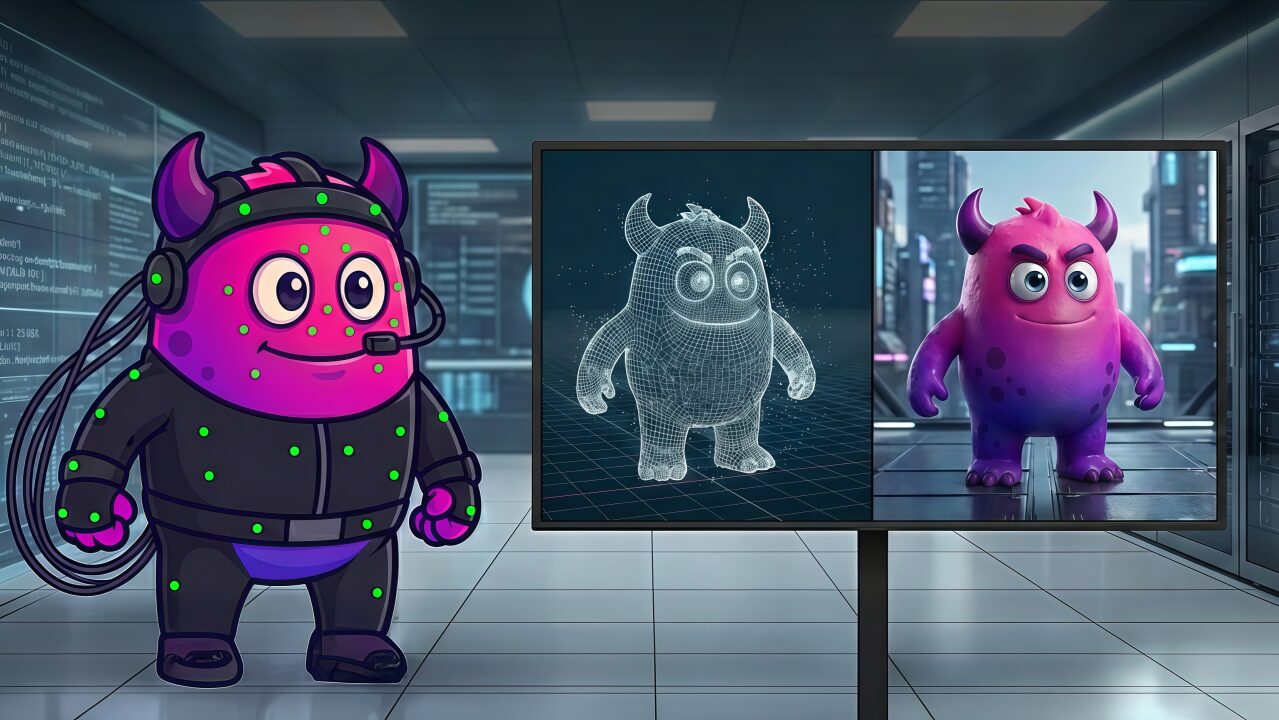
By Eve, Artstash Creative · Published 4 March 2026 · Last updated August 2026
Quick answer: CGI and generative AI are pulling creative in two directions at once. One camp is leaning away from AI entirely, using visibly hand-crafted CGI as a trust and quality signal now that AI output is everywhere. The other is leaning in, using generative models to scale volume and lower production cost. Neither wins outright. AI is not replacing CGI, it is amplifying it, and the studios getting results are the ones deciding deliberately which asset needs craft and which needs volume.
As AI reshapes and challenges the marketing landscape, what rises to the top in an ocean of noise is quality, original ideation, diversification and authentic content.
Why Is There an Anti-AI Resurgence in CGI?
With the advent of generative AI models offering text, images and video in more and more accessible means, the marketing landscape has been challenged by a high volume of lower-quality, unpolished content. In response to this, consumers have become weary of noticeably AI generated content regardless of quality in particular for UGC/live action, as we’ve discussed previously. We are seeing a slight reduction in AI generated growth as creative needs are focusing less on AI for its visuals, and reverting back to authentic production or hybrid creatives to keep LTV and CVR metrics strong. So how do we get that balance when some production timelines for non-AI content can be long, while AI cuts corners?
When Does Leaning Into AI Volume Make Sense?
On the other hand, leaning into the ability of generative AI to produce high volume creative and scale production while lowering production costs definitely has an added benefit. The result is a massive influx of content that isn’t always polished, but allows you to diversify your creative testing and learn what works/doesn’t work more efficiently. However, for certain execution types like CGI or UGC this might not always get the best results. So how can you maximize your performance with AI?
Where Is CGI Headed? Our Expert Analysis
We spoke to our in-house expert for his thoughts on where CGI was headed, and these were his thoughts:
Right now CGI in advertising is being used primarily for cinematics and big releases. Things like launch trailers, major game updates, or significant character releases, etc. With the current state of social media and the influx of UGC and AI-generated content, I’m not seeing as much CGI content in UA ads lately. But this is certainly dependent on the brand/IP – Bigger brands definitely use CGI to separate themselves and make them feel premium, but the smaller, more independent games and brands aren’t experimenting with it as much. (Likely due to cost and time to create.)
If companies are using CGI to create cinematics for things like launch trailers, we recommend repurposing those clips and scenes by chopping them into UA ads. Then, diversify the content by mixing them in with UGC and gameplay clips to elevate the ads and make them feel premium to target an array of audiences
Conclusion: Finding the balance
There is a balance to be found when it comes to using AI for your creative. While it has certainly become a polarizing topic among consumers, the reality is less black and white. CGI produced by AI may not be of the same quality as that of human production, but it is available at a fraction of the cost and time. And that alone is a massive help for smaller teams who don’t have large budgets looking to get their game or app noticed. Furthermore, regardless of team size, the speed at which it produces CGI allows for rapid testing of concepts to see what works, allowing you to spend resources developing and polishing what has already been confirmed to perform.
At Artstash Creative, we believe that AI is not replacing CGI. Rather, they are amplifying each other and creating more opportunities for smaller games and apps to experiment with more diverse creative executions. It allows us to experiment and A/B test the success of concepts before scaling with higher polished, production-intense performing ads. Our focus still remains with the quality of the idea, which is driven by our team of Creative Strategists and Creative Director with a combination of market insights and industry experience.
Frequently asked questions
Is AI replacing CGI in advertising?
No. The two are amplifying each other. Generative AI lowers the cost of volume and iteration, while CGI still carries the craft, control and consistency that hero assets need. The practical question is which of your assets need which.
Why are some brands moving away from AI-generated creative?
Because accessibility has made AI output ubiquitous, and ubiquity erodes distinctiveness. Visibly hand-crafted CGI now reads as a quality and investment signal precisely because it is harder to produce.
When should you use generative AI for creative production?
When you need breadth: high-volume variant testing, early concepting, and iteration where cost per asset matters more than craft. Reserve CGI for the assets carrying brand quality or complex product truth.
How do you balance AI volume with creative quality?
Split the matrix. Use AI to generate and test many directions cheaply, identify what resonates, then invest CGI craft into scaling the winners. Volume finds the signal, craft converts it.
Share this article
Related Articles
Performance Creative Agency vs Brand Agency: What’s the Difference? (2026)
A Day in the Life of an Art Director at Artstash Creative
