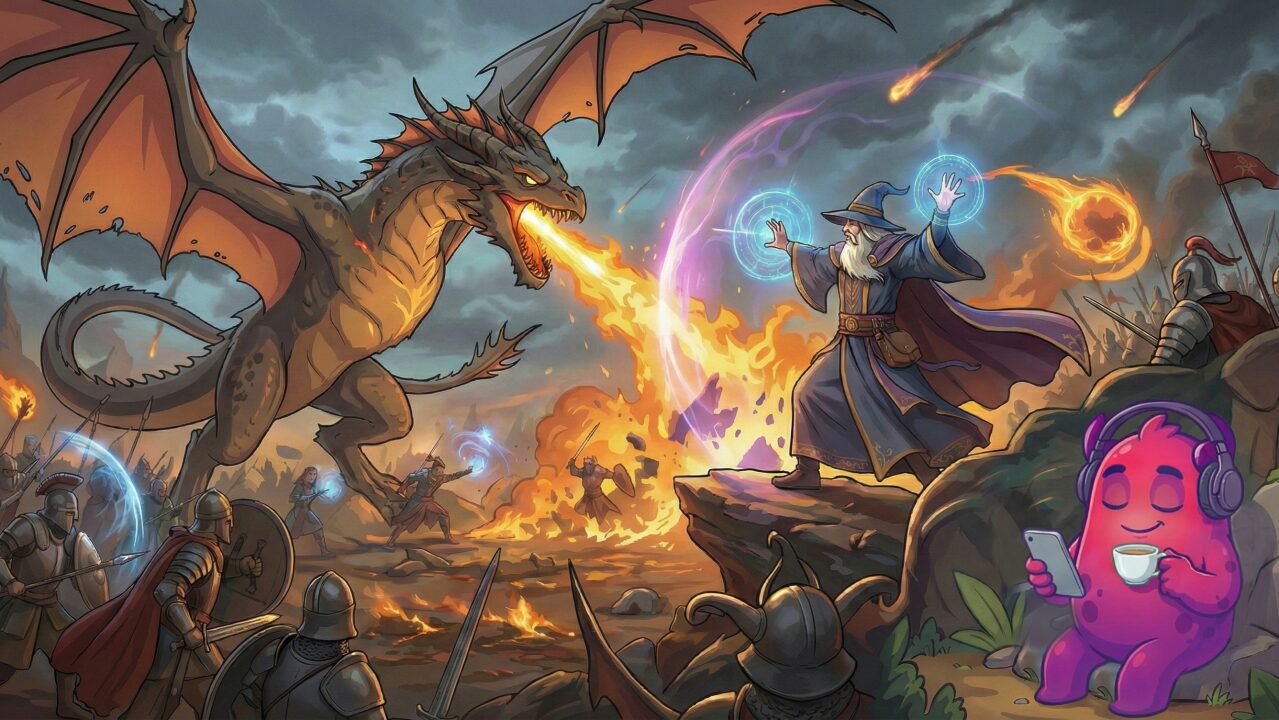

Quick answer: AI is now embedded in mobile game marketing production, and the ethical risks cluster in four places: data privacy, addictive engagement optimisation, bias in targeting and creative, and job displacement. Artstash Creative’s position is that AI should augment human creativity rather than replace it — in practice that means client sign-off on any AI use, labelling AI-generated content, human oversight on tone and representation, and using AI for the grunt work so the team can focus on strategy and storytelling.
By Nick Gibbons, Artstash Creative · Published 9 July 2025 · Last updated 11 August 2026
| Ethical risk | What it looks like in practice | How we handle it |
|---|---|---|
| Data privacy | Personalisation built on extensive player or subscriber data | Anonymise, store securely, never repurpose beyond the stated use |
| Addictive design | Optimising for engagement past the point the user intended | Treat “engaging” and “exploitative” as different goals, and hold the line deliberately |
| Fairness and bias | Targeting trained on skewed historical data excludes regions, ages or genders | Human oversight on tone, language and representation in every creative asset |
| Job displacement | Automating A/B testing, copy variation and reporting | Reframe AI as a tool, not a threat; invest in training and redefine roles |
| Transparency | AI used in production without the client knowing | Client sign-off on any AI use, and label AI-generated content |
At Artstash, we’re all about crafting unforgettable mobile gaming marketing content. We collaborate with industry giants like EA, Activision, Stillfront, to name but a few, as we steer the ever-evolving landscape of marketing apps and mobile games, one thing is clear: Artificial Intelligence (AI) has entered the game, and it’s here to stay.
AI has become an integral part of our development toolkit. From enhancing creatives to streamlining production processes, AI offers unprecedented opportunities. However, with great power comes great responsibility. Let’s delve into the ethical considerations of integrating AI into our work culture.
Should AI Replace Creative Work, or Augment It?
AI’s primary role should be to augment human creativity, not replace it.
Tristan Harris, co-founder of the Center for Humane Technology, emphasizes the importance of aligning AI development with human values. He warns against the potential for AI to exploit human vulnerabilities, leading to addictive behaviors and mental health issues. Harris advocates for ethical frameworks that prioritize user well-being and societal benefit over mere engagement metrics. It’s crucial to ensure that AI serves humanity, not the other way around.
What Are the Main Ethical Risks of AI in Game Marketing?
Data Privacy
AI systems often rely on extensive user data to provide personalized experiences. Without robust privacy guidelines and security measures, this could risk infringing on personal privacy. Companies must handle data responsibly, ensuring anything that is user focused, (i.e. a gaming company storing a player’s data) is anonymized, securely stored, and not misused. The same can be said if someone signs up to a newsletter or a blogging platform for a specific company.
Addictive Design
AI is incredibly effective at optimizing for engagement. It can learn when a user is most vulnerable to clicking, watching, or spending—and serve content accordingly. While optimizing engagement is good marketing, there’s a fine line between “engaging” and “exploitative.” When AI nudges people to spend more time than they intended, it shifts from helpful to harmful. Striking a balance between engagement and responsible gaming is essential.
Fairness and Bias
AI can unintentionally exclude or stereotype users if it’s trained on skewed or limited data sets. For example, targeting based only on historical user data might favor certain demographics over others. This can lead to unfair campaign reach, excluding certain regions, age groups, or genders. It can also reinforce outdated stereotypes in creative messaging. Include human oversight for tone, language, and representation in creative assets.
Will AI Replace Creative Jobs in Games Marketing?
AI can automate tasks that once required human effort—from A/B testing creatives to writing copy. But what happens to the people who used to do those jobs? While automation increases efficiency, it also creates anxiety about job security and erodes trust in workplace culture.
Embracing Ethical AI
At Artstash, we believe in a human-centric approach to AI integration:
Transparency: We encourage open discussions about AI’s role within Artstash, inviting feedback and diverse perspectives.We always get approval and sign offs from all our clients if and when we use AI either to help in production (e.g. ideation, storyboarding tools etc) or to be used in the final product. We believe it is vital to label AI-generated content, and be transparent about our usage, this is vital in retaining healthy client relations. We have reframed AI as a tool, not a threat. Letting it handle grunt work (reporting, copy variations), so our team can focus on strategy, storytelling, and creativity.
Establish Ethical Guidelines: Develop comprehensive policies that outline acceptable AI use, ensuring alignment with organizational values.
Inclusivity: While AI can automate repetitive tasks, it’s essential to view it as a tool that augments human creativity rather than replaces it. Investing in employee training and redefining roles can help integrate AI without displacing valuable team members.
Continuous Learning: We stay updated on ethical AI practices and regularly review how we use it internally to ensure we are aligned as a company but also to be aligned with industry standards & regulations. We talk very openly with all those we work with and equip our employees/colleagues with the knowledge and skills to work alongside AI effectively and ethically.
Staying Sane in the Age of AI
It’s easy to feel overwhelmed by the rapid advancements in AI. However, it’s important to remember that AI is a tool designed to assist, not dominate. By setting clear boundaries and maintaining a focus on ethical practices, we can harness AI’s potential without compromising our values.
Frequently asked questions
How does AI in gaming affect player privacy?
AI personalisation depends on player data, so the risk sits in how that data is handled rather than in the AI itself. Player data should be anonymised, stored securely, and never repurposed beyond the use it was collected for. The same obligations apply to marketing data: newsletter signups and campaign audiences are no different.
Does AI in game marketing lead to job displacement?
It automates specific tasks — A/B testing variants, copy variations, reporting — rather than whole roles. The displacement risk is real where a team treats AI as a headcount decision instead of a capacity one. Our approach is to move people up the value chain: AI handles repetitive production work, people do strategy, storytelling and creative direction.
What is addictive design in AI-driven advertising?
AI is very good at learning when a user is most likely to click, watch or spend, and serving content at exactly that moment. Optimising for engagement is normal marketing. The line is crossed when the system nudges people to spend more time or money than they intended, and that judgement has to be made deliberately, because the optimisation will not make it for you.
Can AI introduce bias into ad targeting and creative?
Yes. A model trained on historical performance data will favour the demographics that historically performed, which quietly excludes regions, age groups and genders from campaign reach. It can also reproduce dated stereotypes in creative messaging. The mitigation is human review of tone, language and representation before assets ship.
Does Artstash Creative use AI in client work?
Yes, with client sign-off. AI is used in production for ideation, storyboarding, copy variations and reporting, and any AI use in a final deliverable is agreed with the client in advance and labelled. The principle is that AI handles the grunt work so the team can focus on strategy and craft.
Sources and further reading
- Tristan Harris, Center for Humane Technology — on aligning AI development with human values, and the risk of optimising for engagement over wellbeing.
- UK Information Commissioner’s Office — guidance on AI and data protection.
Final Thoughts
AI presents exciting opportunities for innovation in the gaming industry. At Artstash, we’re dedicated to navigating this new frontier with integrity, creativity, and a touch of humor. After all, what’s a game without a little fun?
Share this article
Related Articles
December Insights
4,000 Weeks in a lifetime